8 Hidden Gems in Sydney: Local Secrets Revealed
Sydney has more to offer than just the Opera House and Harbour Bridge. This guide highlights 8 hidden gems that showcase the city's charm, history, and natural beauty - perfect for those looking to explore beyond the usual tourist spots. Here’s a quick overview:
- Wendy's Secret Garden: A peaceful retreat in Lavender Bay, created out of love and grief. Free entry.
- Milk Beach: A secluded beach in Vaucluse with stunning Harbour views. Accessible via bus, ferry, or a short walk.
- Angel Place: A laneway art installation (Forgotten Songs) paying tribute to Sydney’s lost bird species.
- Paddington Reservoir Gardens: A blend of 19th-century architecture and modern design. Free entry.
- The Rocks Discovery Museum: Explore Sydney’s colonial history in a restored sandstone warehouse. Free entry.
- Cockatoo Island: A UNESCO World Heritage site with convict history, tours, and overnight stays.
- Chinese Garden of Friendship: A serene escape in Darling Harbour, designed with Taoist principles.
- Sydney Super Pass: A 12-month digital pass offering discounts on Sydney’s top attractions and hidden gems.
These spots combine history, nature, and tranquillity, with many being free or budget-friendly. Whether you're a first-time visitor or a local, they offer a fresh way to experience Sydney.
Pro Tip: Plan visits during quieter times (early mornings or weekdays) for a more relaxing experience.
The Untold Story of Sydney: Secrets Revealed! Hidden Gems ...
1. Wendy's Secret Garden
Just 3 km north of Sydney's CBD, in Lavender Bay, lies Wendy's Secret Garden - a hidden gem born from love and loss.
"When Wendy Whiteley lost her husband, Australian artist Brett Whiteley, in 1992, she funnelled her love and grief into transforming a disused, derelict train yard space."
Over 25 years, Wendy, alongside two gardeners, shaped the garden bit by bit, without a formal blueprint. Wendy herself describes the process:
"The only way you could have built this space is exactly the way I've done it. We built it bit by bit without big machinery. We built the terraces with begged, borrowed and bought stuff."
Ready to visit this peaceful retreat? Here's how to find it.
Finding the Garden
Spot the enormous Moreton Bay fig tree near Wendy's unique four-storey home, complete with a white tower. You can reach the garden via:
- A short 5 to 10-minute walk from North Sydney or Milsons Point train stations
- A scenic 10 to 15-minute harbourside walk from Milsons Point or McMahons Point ferry wharves
Visiting Tips
The garden is open every day and free to explore. Plan your visit during daylight hours, as the paths can be uneven. While the terrain includes steep slopes, ramps have been added to make it more accessible.
Thanks to a 30-year lease granted by the NSW Government in 2015, the garden's future is secure, ensuring this tranquil space will continue to welcome visitors for years to come.
2. Milk Beach
Milk Beach, nestled within Sydney Harbour National Park in Vaucluse, is a small yet stunning 30-metre stretch of sand. It offers incredible views of the Sydney skyline, the Harbour Bridge, and the historic Strickland House.
Location and History
This beach gets its name from colonial times when boats delivered milk and other supplies to Strickland House. Tucked away at the base of Hermit Bay (Vaucluse Road, Vaucluse NSW 2030), it remains a hidden gem in Sydney's Eastern Suburbs.
"Offering a breathtaking view of Sydney, Milk Beach is one of Sydney's Eastern Suburbs well-kept secrets." - NSW Government
Getting There
Public Transport
- Bus: Take route 325 to the "Strickland House, Vaucluse Rd" stop. From there, it's just a 4-minute walk to the beach.
- Ferry: Ride a ferry to Watsons Bay Wharf, then enjoy a scenic 13-minute walk.
By Car
- Parking is limited, so arriving early is your best bet, especially on weekends.
What to Know Before You Visit
Milk Beach boasts a 4.6/5 rating on Google, and it’s easy to see why. Here are some tips to make your visit enjoyable:
- There are no cafes or shops nearby, so be sure to bring your own food and drinks.
- The closest toilets are at Nielsen Park or Shark Beach.
- Dogs and loud music are not allowed.
- Access the beach via the Hermitage Foreshore Walk.
Families love the calm waters and rock pools, while solo visitors often come to soak in the peaceful harbour views. Whether you're here for the history or the serenity, Milk Beach offers a unique experience in Sydney's vibrant landscape.
3. Angel Place
Angel Place, nestled in Sydney's CBD at 123 Pitt Street, is home to the breathtaking art installation Forgotten Songs. This laneway transforms an otherwise typical urban spot into a moving tribute to 50 bird species that once lived in central Sydney before European settlement reshaped the area.
The Art Installation
Forgotten Songs features 120 empty birdcages suspended mid-air, creating a striking visual. It honours the songs of 50 bird species that once thrived in the area.
"The installation explores how Sydney's fauna has evolved and adapted to co-exist with increased urbanisation – inviting contemplation of the city's past, its underlying landscape, and the sustainability issues associated with increased urban development." - Michael Thomas Hill
Best Times to Visit
The installation offers two distinct experiences depending on the time of day:
| Time | Experience | Key Species |
|---|---|---|
| Daytime | Native diurnal birdsong | Eastern Whipbird, Rockwarbler |
| Night-time | Nocturnal bird calls | Australian Owlet-nightjar, Powerful Owl |
Getting There
Angel Place is just a short 5-minute walk from both Wynyard and Martin Place Stations.
Photography Tips
For standout photos, try these tips:
- Position yourself at either end of the laneway to capture the full view of the suspended birdcages.
- Look upwards for creative angles.
- Visit at different times of day to take advantage of changing light conditions.
These approaches not only enhance your photos but also immerse you in the history and beauty of Angel Place.
Historical Significance
Originally part of the 2009 By George! Laneways program, Forgotten Songs was so well-received that it became a permanent fixture in 2012. The names of the 50 bird species it commemorates are etched into the ground, serving as a poignant reminder of Sydney's natural history. With 129 native bird species in NSW now listed as extinct or threatened, the installation carries a powerful message about conservation and the impact of urbanisation. It’s a compelling link between the city’s past and its ever-changing landscape.
4. Paddington Reservoir Gardens
Underneath Oxford Street in Paddington lies a historic water reservoir that has been transformed into a garden blending 19th-century industrial design with modern elements.
Historical Significance
Once a key part of Sydney's water supply system, the reservoir consisted of two chambers, each about 33 by 31 metres. The western chamber was completed in 1866, followed by the eastern chamber in 1878. It served as a water source until 1899, after which the Paddington Municipal Council purchased the site in 1934 for £3,750.
The Transformation
After years of varied use and a partial collapse in 1990, the site was reimagined as an urban park. In 2006, Tonkin Zulaikha Greer Architects and JMD Design revitalised the space, preserving original materials like brick, timber, and iron while adding modern features. The western chamber now houses a sunken garden with a peaceful pond, while the eastern chamber showcases its heritage through retained architectural details.
Visitor Information
| Feature | Details |
|---|---|
| Opening Hours | Street level: Open 24/7 |
| Lower Chamber | Accessible during daylight hours only (via lift) |
| Entry Fee | Free |
| Best Time to Visit | Sunset, for dramatic lighting |
| Photography | Permits required for photography |
Design Recognition
Paddington Reservoir Gardens has been celebrated for its seamless integration of history and modern design. It won the Australian Award for Urban Design in 2009 and received praise from ABC's Art Nation and Gardening Australia. This unique blend of past and present makes it a must-see destination.
Practical Tips
The gardens are divided into two levels. At street level, you'll find open lawns ideal for relaxing. The lower chamber, accessible by lift during daylight, reveals the site's industrial past with its preserved architecture. Visiting at sunset offers a stunning view, as the lighting enhances the garden's serene atmosphere. Conveniently located near bus stops, it’s an easy and worthwhile stop when exploring Sydney.
sbb-itb-680b8ac
5. The Rocks Discovery Museum
Step back in time and uncover Sydney's rich past at The Rocks Discovery Museum. Nestled in a restored sandstone warehouse from the 1850s, this museum offers a fascinating glimpse into the city's colonial history. Opened in 2005, it occupies three historic buildings dating back to 1844.
Exhibition Highlights
The museum's displays trace The Rocks' journey from its pre-European roots to modern times. Featuring archaeological artefacts unearthed during local development, the exhibits provide a direct link to Sydney's transformation over centuries.
Visitor Information
| Detail | Information |
|---|---|
| Location | 2-8 Kendall Ln, The Rocks NSW 2000 |
| Opening Hours | 10am to 5pm daily |
| Closed | Good Friday and Christmas Day |
| Entry Fee | Free admission |
| Recommended Time | At least 1 hour |
This museum offers a refreshing contrast to Sydney's contemporary landmarks, giving visitors a deeper appreciation of the city's heritage.
Making the Most of Your Visit
Knowledgeable guides are on hand to explain the exhibits and their historical importance. During school holidays, the museum comes alive with special activities and art competitions, adding an interactive element to its displays.
Local's Tip
For a peaceful visit, head there on a weekday morning. Positioned on Kendall Lane, the museum is perfectly located for exploring other historic attractions in The Rocks precinct, making it a great starting point to dive into the area's storied past.
6. Cockatoo Island
Cockatoo Island, or Wareamah as it’s known by its Traditional Owners – the Wallumedegal, Wangal, Cammeraygal, and Gadigal Peoples – is a site steeped in history. This UNESCO World Heritage site offers a mix of historical depth and modern-day activities. Here’s what you need to know about its past, how to get there, and what to do once you arrive.
Historical Significance
Cockatoo Island has a fascinating past. From 1839 to 1869, it operated as a convict colony, later transitioning into one of the country’s key shipyards from 1857 to 1991. Today, it’s part of the Australian Convict Sites World Heritage Property, a group of 11 locations recognised for their role in convict transportation and colonial expansion.
"the best surviving examples of large-scale convict transportation and the colonial expansion of European powers through the presence and labour of convicts" - UNESCO on Australian Convict Sites
Getting There
Reaching Cockatoo Island is straightforward, with several convenient transport options available:
| Transport Details | Information |
|---|---|
| Ferry Services | F3 and F8 lines |
| Departure Points | Circular Quay, Darling Harbour, Barangaroo |
| Operating Hours | Daily (from the first ferry to the last) |
| Entry Fee | Free |
Must-Do Experiences
Heritage Tours
Explore the island’s convict history and maritime legacy with guided tours that bring its stories to life.
Stay Overnight
Choose from heritage accommodations or the island’s campground for a unique overnight experience. Staying after dark offers a peaceful escape and stunning views of the Harbour.
Local Tips
Plan your visit for a weekday morning to avoid crowds. Pack a picnic or opt for a meal at one of the waterfront cafés. Don’t miss the industrial architecture, which makes for striking photos against the Harbour backdrop.
Historical Note
Between 1871 and 1913, the island was renamed Biloela in an effort to move away from its convict history. Today, this layered past is embraced as a key part of Australia’s heritage, offering visitors a chance to connect with the nation’s complex history.
7. Chinese Garden of Friendship
Tucked away in Darling Harbour, the Chinese Garden of Friendship offers a serene escape from Sydney's bustling streets. Opened in 1988 to celebrate the bond between Sydney and Guangzhou, it holds the honour of being the first Chinese garden in the Southern Hemisphere. Its intricate design and rich cultural elements make it a standout destination.
Garden Design and Features
Designed with Taoist principles of Yin-Yang and the five elements, the garden is divided into seven harmonious zones. At its heart lies the Lake of Brightness, featuring water lilies and sacred lotus flowers. The Dragon Wall - gifted by Guangdong - displays two imperial dragons playing with a friendship pearl.
| Garden Features | Highlights |
|---|---|
| Pathways | Meandering paths through bamboo groves |
| Water Features | Cascading waterfalls and koi-filled ponds |
| Structures | Traditional pavilions and elegant bridges |
| Flora | Sacred lotus and water lilies |
These features create a peaceful and immersive experience.
Visitor Information
Entry fees are as follows:
- Adults: A$6.00
- Concession/Students: A$3.00
- Family (2 adults, 2 children): A$15.00
- Annual Membership: A$39 (includes unlimited visits and four free parking passes)
Local Tips
Catch the koi feeding sessions at 11:30 or 15:30 for a delightful experience. After exploring, unwind with tea at the teahouse, either indoors or by the pond. Don't miss the information boards in the pavilions - they offer fascinating details about Chinese culture and the garden's symbolism.
Annual Membership Perks
For frequent visitors, memberships are available: individual plans range from A$39 to A$58, while family memberships (two adults and three children) cost A$118. Memberships include unlimited access, making them perfect for anyone seeking a regular escape into tranquillity.
8. Sydney Super Pass
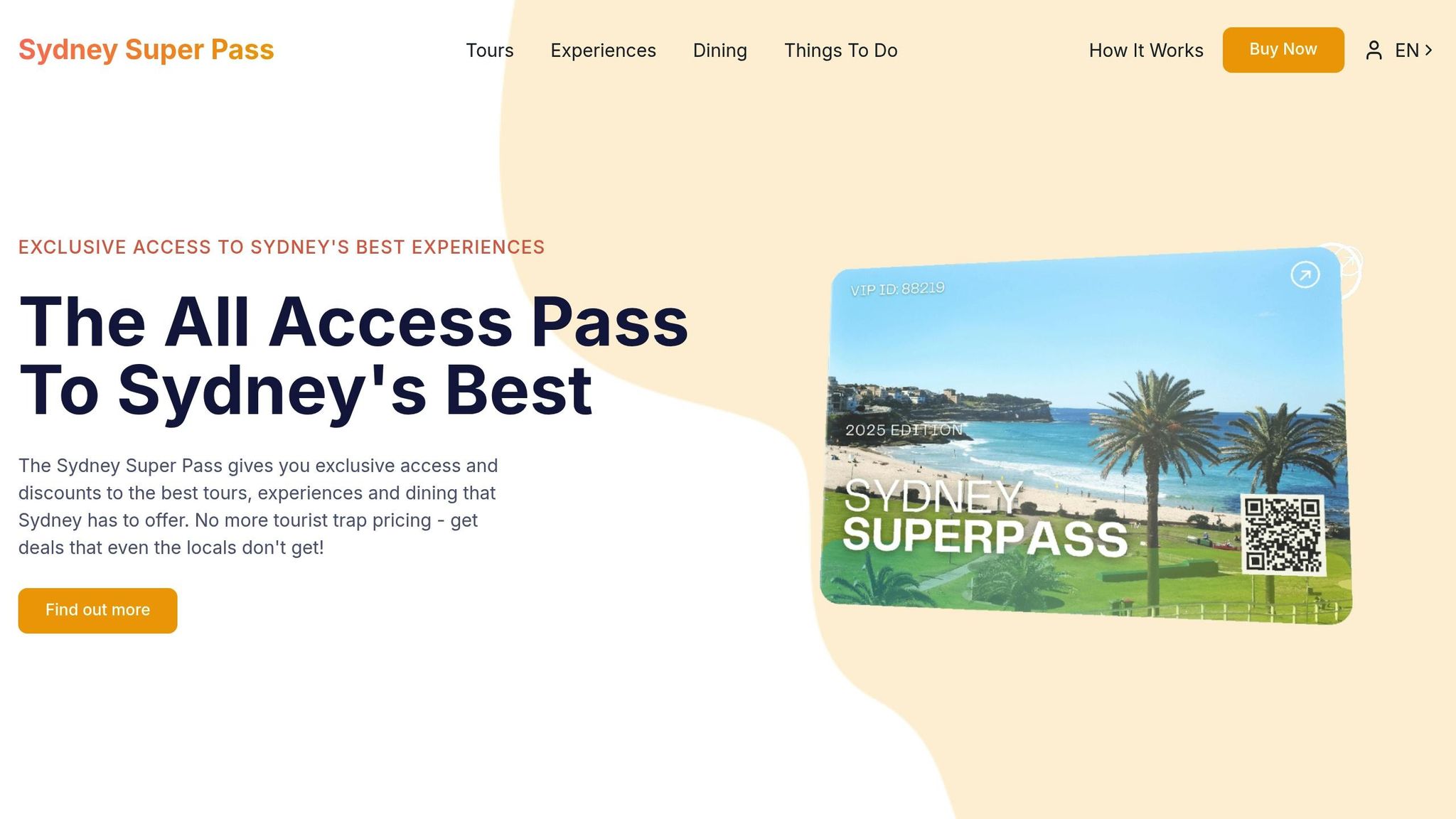
Discovering Sydney's hidden gems is just the beginning. The Sydney Super Pass takes your experience up a notch by combining these lesser-known spots with the city's iconic attractions. This 12-month pass provides discounted access to top destinations, making it a great option for both locals and visitors.
Pass Benefits and Features
Here's what the pass includes:
| Feature | Details |
|---|---|
| Validity | Active for 12 months from the date of purchase |
| Format | Digital pass for contactless entry |
| Sharing | Can be shared with family and friends |
| Coverage | Includes major attractions and lesser-known spots |
| Extras | Discounts on premium dining experiences |
Save Money While Exploring
With the Sydney Super Pass, you can save up to 50% on entry fees. It covers must-visit places like the Sydney Harbour Bridge Climb, SEA LIFE Sydney Aquarium, and Opera House tours.
Tips for Getting the Most Out of Your Pass
Make your pass work harder for you by following these tips:
- Check participating venues in advance to plan your itinerary.
- Visit during quieter times to avoid long queues.
- Keep an eye out for seasonal promotions to stretch your savings further.
Effortless Digital Access
The pass is designed for convenience. It’s delivered straight to your mobile, allowing for instant activation and contactless entry. Plus, you’ll have easy access to the latest offers and updates.
Whether you're planning a quick weekend trip or a longer stay, the Sydney Super Pass offers a mix of iconic landmarks and hidden treasures, all with the ease of a single pass.
Conclusion
Sydney is packed with hidden gems, and one way to make the most of them is with the Sydney Super Pass. From the peaceful Wendy's Secret Garden to the historic Cockatoo Island, these eight spots highlight Sydney's diverse charm and rich history.
The pass combines access to both famous and lesser-known attractions, offering up to 50% savings on entry fees and a 12-month validity. Plus, its digital, contactless format means you can explore at your own pace. Visitors have praised its convenience:
"The card made getting into places so easy. There is so much choice of things to do. Highly recommend it to everyone!"
Whether you're relaxing at Milk Beach or strolling through the Chinese Garden of Friendship, the Sydney Super Pass gives you the flexibility to design your own itinerary. To make the most of your trip, consider these tips:
| Time of Visit | Suggested Benefit |
|---|---|
| Early Morning | Enjoy quieter gardens and beaches |
| Midday | Great for indoor spots like The Rocks Discovery Museum |
| Late Afternoon | Perfect lighting for photography at Paddington Reservoir |
| Weekdays | Fewer crowds at popular spots like Angel Place |
This thoughtful planning turns your Sydney adventure into a personal and hassle-free experience. With over 7.5 million travellers using similar passes in cities worldwide, it’s a smart way to explore Sydney's treasures.
For even more convenience, download the companion app for instant digital access and up-to-date information about each attraction.
"Must have item!! This an easy and cost effective way to see Sydney. All the major Attractions are covered and hassle free entry to these Attraction..." - Corne